Italy is one of the most attractive European destinations for foreign workers who are looking for employment opportunities, better living conditions, and access to the European job market. Every year, thousands of non-EU nationals explore opportunities to work in Italy in sectors such as construction, agriculture, hospitality, logistics, manufacturing, healthcare, and domestic care.
If you are planning to work in Italy, obtaining an Italy Work Permit Visa is an important part of the legal immigration process. However, the procedure is different from simply applying for a tourist visa. In most cases, a foreign worker needs an Italian employer who is willing to hire them and complete the required sponsorship and work authorization procedures.
This guide explains the Italy work permit visa process, eligibility requirements, documents, costs, processing time, and other important information for prospective foreign workers.
What Is an Italy Work Permit Visa?
An Italy Work Permit Visa allows a non-EU citizen to enter Italy for employment purposes after receiving the necessary authorization from the Italian authorities.
The process generally involves two important stages. First, the employer in Italy applies for a work authorization, commonly known as a Nulla Osta al Lavoro, on behalf of the foreign worker. Once the authorization is approved, the worker can apply for the appropriate Italian long-stay work visa through the Italian diplomatic authorities responsible for their place of residence.
After entering Italy, the worker must complete the required residence formalities and obtain a residence permit for employment.
It is therefore important to understand that an Italy work visa and a work permit are not exactly the same thing. The work authorization is generally obtained before the visa, while the visa allows the worker to travel to Italy for the approved employment.
Who Can Apply for an Italy Work Visa?
Italy work visas are generally available to non-EU nationals who have a genuine employment opportunity in Italy and meet the applicable immigration requirements.
Applicants normally need:
- A valid employment offer from an Italian employer
- An employer willing and legally able to sponsor the worker
- Approval of the required work authorization
- A valid passport
- Supporting personal and employment documents
- A visa application submitted through the appropriate Italian authority
- Compliance with Italian immigration and entry requirements
The exact requirements can vary depending on the type of employment, nationality, profession, and immigration rules applicable at the time of application.
Italy Work Permit Visa Requirements
One of the most important parts of the application is preparing the correct documentation. Although the exact document list may differ depending on the applicant and employment category, applicants may be asked to provide documents such as:
- Valid passport
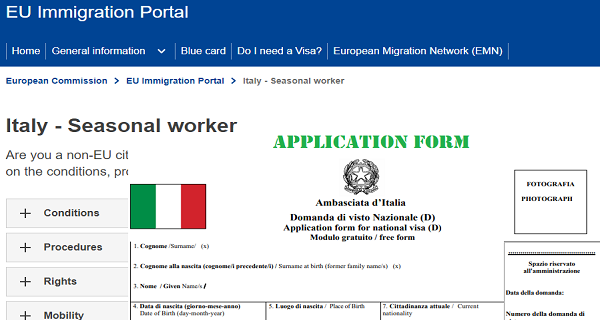
- Completed visa application form
- Recent passport-size photographs
- Employment contract or job offer documentation
- Approved work authorization or Nulla Osta
- Evidence of accommodation where applicable
- Proof of professional qualifications or experience, if required
- Relevant educational certificates
- Travel-related documents
- Additional documents requested by the Italian embassy or consulate
Applicants should always check the latest document requirements with the relevant Italian embassy, consulate, or official visa service before submitting an application.
How to Get an Italy Work Permit Visa
The Italy work visa application process usually begins with finding a legitimate employer in Italy. A foreign worker cannot normally obtain a work visa simply by applying independently without an eligible employment opportunity.
Step 1: Find an Italian Employer
The first step is to obtain a genuine job offer from an Italian company, business, farm, household, or other eligible employer.
The employer should be legally established and willing to complete the required immigration procedures.
Step 2: Employer Applies for Work Authorization
After selecting a foreign worker, the Italian employer generally submits an application for the necessary work authorization to the competent Italian authorities.
This authorization is commonly referred to as a Nulla Osta.
Approval can depend on the applicable immigration quota, employment category, and other legal requirements.
Step 3: Apply for the Italy Work Visa
Once the required work authorization has been issued, the worker can proceed with the visa application.
The applicant submits the required documents and completes the relevant procedures through the Italian embassy, consulate, or authorized visa application center serving their location.
Step 4: Travel to Italy
If the visa application is approved, the applicant can travel to Italy according to the conditions of the issued visa.
However, obtaining the visa does not mean that all immigration formalities are complete.
Step 5: Apply for a Residence Permit
After arriving in Italy, the foreign worker must complete the required residence permit procedures within the applicable deadline.
The residence permit allows the worker to legally reside and work in Italy under the conditions of their employment authorization.
Italy Work Visa for Bangladeshi Citizens
Bangladeshi citizens who want to work in Italy generally need to follow the same fundamental immigration process applicable to other non-EU nationals.
For applicants from Bangladesh, one of the most important factors is having a genuine employment opportunity and an Italian employer capable of completing the required work authorization process.
Before paying any agent or intermediary, applicants should carefully verify the authenticity of the job offer, employer, employment contract, and immigration documents.
A promise such as “guaranteed Italy work visa” or “Italy visa without employer” should be treated with caution. Immigration decisions are made by the relevant Italian authorities, and no private person can legitimately guarantee visa approval.
Popular Jobs in Italy for Foreign Workers
Foreign workers may find opportunities in several industries depending on their skills, experience, language ability, and the demand for workers.
Some commonly discussed employment sectors include:
Agriculture
Italy has a significant agricultural sector, and seasonal employment can include work involving fruits, vegetables, vineyards, farms, and harvesting.
Construction
Construction workers with appropriate skills and experience may find employment in areas such as masonry, carpentry, electrical work, plumbing, painting, and general construction.
Hospitality and Tourism
Hotels, restaurants, cafés, and tourism-related businesses can provide employment opportunities for qualified foreign workers, particularly in areas with high tourism activity.
Logistics and Warehousing
The logistics industry may offer positions related to warehouses, packaging, transportation, inventory, and distribution.
Manufacturing
Italy has a large manufacturing sector that includes machinery, food processing, textiles, automotive-related industries, and other production activities.
Domestic and Care Work
Care workers and domestic workers may also find employment opportunities, particularly where there is demand for elderly care and household assistance.
The availability of jobs changes over time, and applicants should not assume that a particular job is currently available simply because it was available in previous years.
Italy Work Permit Visa Cost
The total cost of moving to Italy for employment can include several different expenses. These may include:
- Visa application fees
- Work authorization-related costs
- Residence permit fees
- Document translation and legalization costs, where applicable
- Travel expenses
- Medical or insurance-related expenses where required
- Accommodation and initial living expenses
The exact amount depends on the applicant’s circumstances and the type of application. Government fees can also change, so applicants should verify the current fees before making payments.
In addition to official fees, applicants should be careful about unofficial agents who demand large amounts of money for a supposed guaranteed job or visa.
Italy Work Visa Processing Time
The processing time for an Italy work permit visa can vary considerably.
Several factors may affect the timeline, including:
- Availability of immigration quotas
- Employer documentation
- Work authorization processing
- Visa appointment availability
- Embassy or consulate workload
- Completeness of the application
- Background and document verification
- Individual circumstances of the applicant
For this reason, applicants should avoid websites or agents that promise a fixed approval time without considering these factors.
Italy Work Permit Quota System
Italy uses an immigration quota system for certain categories of non-EU workers. The government periodically establishes rules concerning the entry of foreign workers, including seasonal and non-seasonal employment.
This means that an applicant may meet the basic qualifications for a job but still need to fall within the applicable immigration framework and quota.
The availability of work permits can therefore depend heavily on the current year’s immigration policy and quota arrangements.
Can You Bring Your Family to Italy?
Depending on the type and duration of the residence permit and the applicant’s circumstances, foreign workers legally residing in Italy may have options for family reunification.
Family immigration has separate requirements, and applicants may need to demonstrate factors such as suitable accommodation, sufficient income, and the required family relationship.
Anyone planning to bring family members should check the current Italian family reunification rules before making arrangements.
Benefits of Working Legally in Italy
Obtaining legal employment in Italy can provide several advantages compared with working without authorization.
These may include:
- Legal employment status
- Access to employment protections
- Social security contributions
- Access to applicable healthcare services
- Ability to establish legal residence
- Potential opportunities for family reunification
- Possibility of renewing residence status when eligible
Legal status is extremely important because unauthorized employment can create serious immigration and legal problems.
Important Tips Before Applying
Before starting an Italy work permit visa application, consider the following points:
Verify the employer: Make sure the company or employer actually exists and is offering a legitimate position.
Check the contract: Carefully review salary, working hours, job responsibilities, accommodation arrangements, and other employment conditions.
Do not trust guaranteed visa claims: No agent should guarantee that an embassy or immigration authority will approve your visa.
Keep your documents authentic: Never submit fake certificates, employment letters, bank statements, or other documents.
Check official information: Immigration regulations, quotas, fees, and procedures can change, so always verify current information through official Italian government or diplomatic sources.
Frequently Asked Questions About Italy Work Permit Visa
Can I apply for an Italy work visa without a job offer?
Generally, a standard employer-sponsored work visa requires an eligible employment opportunity and the necessary work authorization. Therefore, simply applying for an Italy work visa without an eligible employer is generally not sufficient.
How can I get an Italy work permit from Bangladesh?
A Bangladeshi applicant generally needs to secure a legitimate job with an eligible Italian employer. The employer then completes the required work authorization process, after which the applicant can proceed with the appropriate visa application through the responsible Italian diplomatic authority.
Is an Italy work visa the same as a tourist visa?
No. A tourist visa is intended for short-term visits and does not normally authorize employment. Working in Italy requires the appropriate legal employment and residence authorization.
Can I work in Italy after entering with a tourist visa?
A tourist visa should not be used as a substitute for a work visa. Foreign nationals should obtain the appropriate authorization before undertaking employment.
How long can I stay in Italy on a work visa?
The duration depends on the employment contract, work authorization, and residence permit issued to the worker. The applicable residence status must be maintained and renewed according to Italian immigration rules.
Final Words
The Italy Work Permit Visa process can provide a legal pathway for qualified non-EU workers to take up employment in Italy. However, the process involves more than simply submitting a visa application. In most cases, securing a legitimate employer and obtaining the required work authorization are essential steps.
For applicants from Bangladesh and other non-EU countries, careful document preparation and verification are especially important. Avoid fake job offers, fraudulent documents, and agents who promise guaranteed visas.
Because Italian immigration rules, quotas, fees, and application procedures can change, always verify the latest requirements with the relevant Italian authorities before submitting an application or paying any service provider.
Disclaimer: This article is provided for general informational and educational purposes. Immigration laws, visa fees, quotas, processing procedures, and eligibility requirements may change. Applicants should verify the latest information with official Italian government authorities, the relevant Italian embassy or consulate, and authorized visa service providers before making immigration decisions.